About
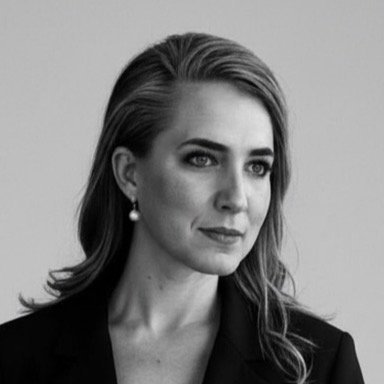
Keren Threlfall is a storyteller, scholar, poet, author, and strategist based in South Carolina. Her work moves between anthropology, folklore, feminist and critical theory, and surveillance studies, and it begins from a single observation: that the people with the most to say about power are very often the ones least permitted to say it. She treats creative practice as a method in its own right; poetry is where she tests what the theory cannot yet say.1
At the annual meetings of the American Folklore Society she has presented research on how power conceals its architecture, and on the forms of knowledge that survive being disbelieved. Her fieldwork has taken her to the pulque fields of central Mexico, to the border at Tijuana, and to a refugee classroom in Lebanon’s Bekaa Valley; her graduate study at Harvard Extension School — with Davíd Carrasco, Lowell Brower and Matthew Hay Brown among her professors and intellectual mentors — added Mesoamerican cosmology, the folklore of displacement, and a foreign correspondent’s discipline of verification. By her own description she is also a street sociologist: someone who learns institutions from the ground, in the rooms where their decisions land, and from the people on whom they land.
The through-line is story: who is permitted to tell it; how a place, a product or a person comes to carry one; and what survives when the telling is constrained.
Alongside her scholarship runs more than twenty years of practice in real estate, hospitality, design and storytelling for companies — work that taught her to read a room, a household or a brand as an archive of the people it was made for, and to notice who has been left out of the record.
1 Devoted, perhaps to a fault, to em dashes and footnotes — this is one of each. ↩
Scholarship
Conference Presentations
Keren has presented three papers at the Society’s annual meetings, and in 2026 chaired a session as well: on pulque and its priests, on grief under a gag order, and on the vernacular grammars by which mothers persist. The full record is on the Research page.
2019 to present
On leave of absence
Master of Liberal Arts (ALM), Anthropology and Archaeology
Degree in progress. Keren entered the program in 2019 and has completed 56 graduate credits toward it, with a 3.95 grade point average; she is currently on a leave of absence. Her coursework spans Mesoamerican religion and cosmology, ancient Maya art and writing, migration and the U.S.–Mexico borderlands, folklore and storytelling, human trafficking and forced migration, political philosophy and international relations, and foreign correspondence, with field research in central Mexico and reporting from the Tijuana border.
2022
Graduate Certificate in Social Justice, with Distinction
Awarded with distinction in 2022. Alongside the certificate, graduate coursework in anthropology, folklore and journalism, including study of Mesoamerican cosmology with Davíd Carrasco and foreign correspondence with Matthew Hay Brown.
Mexico, 2019
Pulque, in the Field
Fieldwork on pulque in Cuautitlán and across central Mexico, carried out for Moctezuma’s Mexico: Then and Now with Davíd Carrasco — in the maguey fields, beside the fermenting vats, and in the pulquerías where it is poured — and documented in photographs.
Scholarly Record
Experience
Keren Threlfall’s working life and her learning have always run together. A lifelong autodidact, she spent more than two decades in executive leadership, content strategy and systems building while her research was taking shape underneath it. She co-founded and led a company that managed a portfolio of long-term residences and short-term stays; founded a design practice; advised founders; and, for a season, became the storyteller for a teddy bear company — work she did with her daughters as its models, and with the bear as a traveling companion on the family’s own adventures. Each engagement has drawn on the same two habits: building the teams and systems an enterprise runs on, and listening for the story it is already telling.
Owner and lead designer
2017 to present
Interiors and Staging
Residential and commercial staging and design, from plan to installation.
Co-founder and chief executive
2009 to 2024
Real Estate and Hospitality
Co-founded and led a company holding a portfolio of long-term residences and short-term stays, directing acquisitions, renovation, design and guest experience. Built the teams and systems — a staff of up to twelve — that kept the company running smoothly while she lived and worked abroad.
Strategist
2012 to 2022
Strategy for Founders
Business strategy, marketing and coaching for small companies and solo founders, taking ideas from first sketch to six-figure operations, with learning materials written to help them scale.
Creative and marketing strategist
2013 to 2014
Content Creation and Storytelling Strategy
Led content creation and storytelling strategy for Zylie and Friends, a teddy bear with a story of her own, carried in more than 600 stores nationwide and covered by Fast Company, Business Insider and the Huffington Post. Her daughters modeled for the units, crafts and content kits she wrote, and the bear came along on the family’s adventures, which is where the stories came from. Grew the brand’s Instagram audience from under thirty followers to more than fifteen thousand.
Executive assistant to the Registrar
2005 to 2007
University Administration
Supported the Office of the Registrar after graduating, handling confidential academic records, executive correspondence, and reports prepared for academic leadership.
Formation
Appalachia reaches Keren Threlfall by two lines. Her mother’s is an unbroken inheritance of education: beginning with a great-grandmother born in rural West Virginia in 1899, every daughter in the line has gone to university and taken a degree — a remarkable thing in those hills, in those years, and one that each generation of women handed to the next as deliberately as a recipe. Her father’s is an inheritance of labor. He barely finished high school, and he spent his working life in the coalfields: a strip miner in Ohio, then in Wyoming, and in his last years in West Virginia. No one in his line had attended college before her.
She carries both: the women for whom education was a rare privilege, hard won in the West Virginia hills, and the man who went to the coalfields so that his children might choose otherwise. That such work could keep a family at all was itself an inheritance; earlier generations, labor unions and civil rights advocates had fought to make it so, and what it bought his children was more opportunity, and more security, than he had ever known. To be raised between those two inheritances is to become fluent in two kinds of knowing — the kind that comes with a diploma, and the kind that comes home on a man’s hands — and to learn early which of them a room is prepared to believe.
Both lines run through the work now on her desk. A Woman’s Voice Is in the Cookbook reads the family cookbook her mother compiled, recipe by signed recipe, from the kitchens of their West Virginia kin, and finds in it an archive of women’s knowledge passed from hand to hand — a record kept by people whom no one had thought to ask for one. The memoir begun as Around the World in 80 Beds carries the same inheritance outward; in borrowed beds from Harlem to Dubai, it goes on asking what those Appalachian households first taught her to ask: what makes a house a home, and who keeps it.
Her upbringing and schooling took place inside a high-control religious world, one in which questions tended to arrive with their answers already attached, and in which the cost of asking the wrong one was understood by everybody and stated by no one. That world was her first field site; long before she had the vocabulary for it, it taught her how authority narrates itself, how doubt is managed, and what it costs to speak outside a sanctioned story. Her work on power, silence and persistence begins there — which is to say that it began as a way of surviving, and only later became a method.
Graduate study at Harvard Extension School gave those questions a discipline, and a lineage. With Davíd Carrasco she learned to read a Mesoamerican city as a map of the cosmos, and then went to central Mexico to study pulque in the field, among the people who still make it. With Lowell Brower she studied the storytelling of migrants and refugees, and what a story is asked to carry when everything else has been left behind. Around those courses she learned to read ancient Maya inscriptions glyph by glyph, and studied human trafficking and modern slavery with Orlando Patterson, refugee and forced migration, the history of race in the United States, and the workings of power and control in white Christian nationalism.
She also studied foreign correspondence under Matthew Hay Brown (formerly of The Washington Post), and took from it a reporter’s discipline: go there, ask, and verify. For the field assignment she traveled to Tijuana, across the border from San Diego, to report on cross-border economics; the reporting she did there among deported U.S. veterans — men who had served a country that would take them back only in a casket — became For Deported U.S. Veterans, A Flag-Draped Casket Is the Only Way Home.
Germany, Mexico and Guatemala have each been home. In Lebanon’s Bekaa Valley she worked alongside education programs for Syrian refugee children; in central Mexico she carried out fieldwork on pulque; in Harlem and Dubai she lived by home exchange, a guest in other families’ rooms, learning a household from the books it kept on the nightstand.
Motherhood runs beneath all of it. Much of that life abroad was lived with her children, and a country reads differently from a school gate; to enroll a child in a German Kita or a Guatemalan classroom is to learn a place through its paperwork, its playgrounds and its other parents. Her scholarship, her poetry and her prose have all been shaped by that vantage — by parenting across borders, and by watching her children learn a place faster, and with far less armor, than she could.
The poems carry most of it; they return, again and again, to grief and to home — to what it is to make a home for children while still looking for one yourself.
Study
Harvard Extension School coursework in anthropology and folklore, including study of Mesoamerican cosmology with Davíd Carrasco. Master of Liberal Arts in Anthropology and Archaeology, in progress (56 graduate credits, GPA 3.95). Graduate Certificate in Social Justice, with distinction, 2022. Bachelor of Science in Biology, Bob Jones University, May 2005, followed by graduate coursework in its seminary and other graduate study through May 2007.
Fieldwork and archive
Pulque fieldwork in Cuautitlán, Mexico, 2019. Work with sacred texts at Harvard’s Tozzer Library.
Languages
English; intermediate Spanish; beginning Levantine Arabic and German.
Lineages
Michel Foucault, Antonio Gramsci, bell hooks, Audre Lorde, Gloria Anzaldúa, Édouard Glissant, Miranda Fricker, Amy Shuman, Ruth Behar, Renato Rosaldo, Victor Turner, Mircea Eliade, Davíd Carrasco, Michael Jackson, Hannah Arendt, Giorgio Agamben, Achille Mbembe, James C. Scott, Pierre Bourdieu, Clifford Geertz, Toni Morrison.