Writing · Reporting
A Photo of a New Amazon Facility in Tijuana Went Viral as “The Most Dystopian Image of the Year”
But there’s more to the story than meets the eye.
By Keren ThrelfallSeptember 202112 min read
Reported in Tijuana and in Otay Mesa, San Diego, in late September 2021, and written that fall. Wages, prices, timelines and job figures are as they stood then.
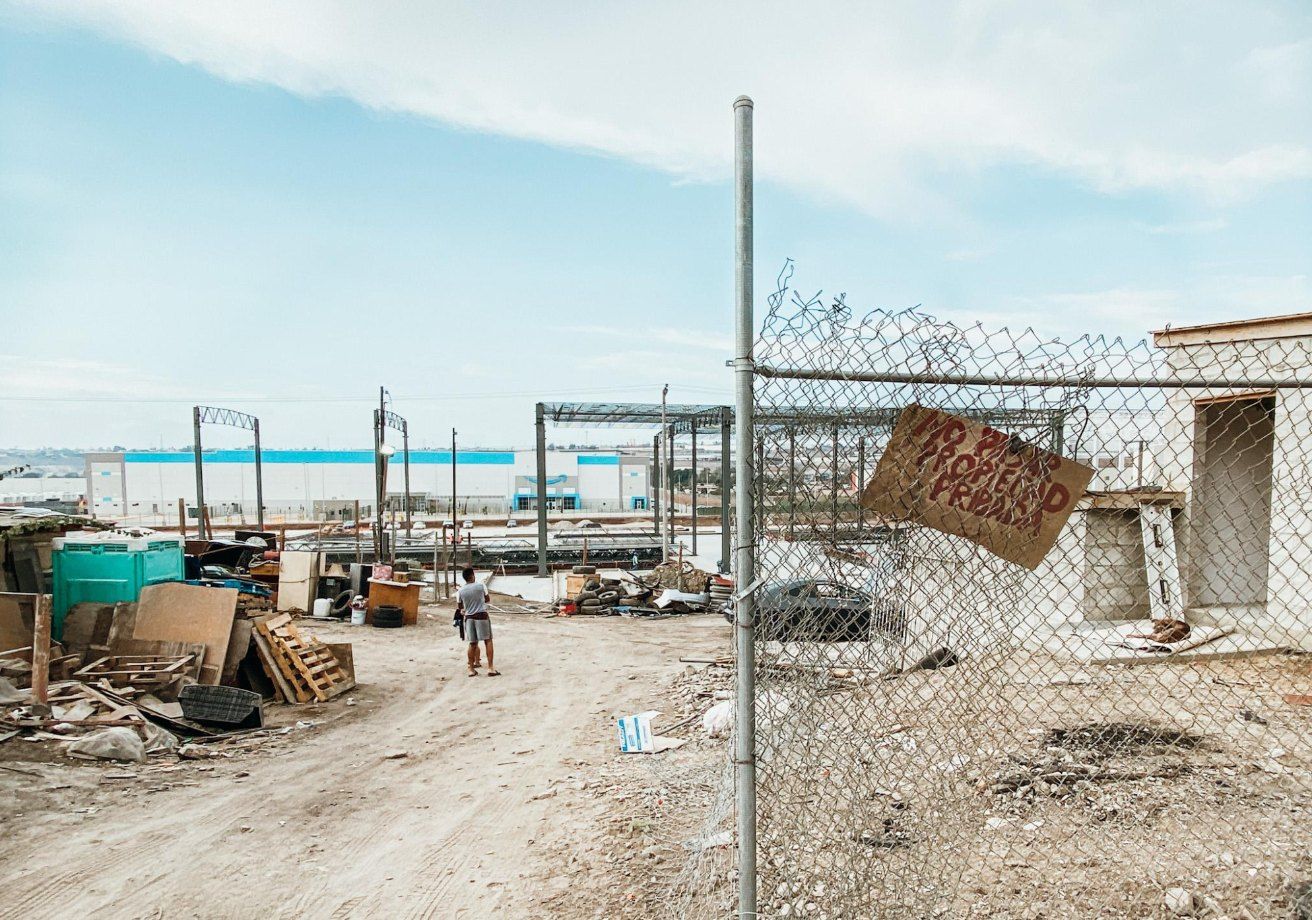
Seeming to smirk at the shantytown beneath it, the smiling blue logo and the impoverished settlement it overlooks quickly became a sensationalist symbol of how the gaping jaw of transnational capitalism is capable of swallowing up anything in its path.
To others, it represents something different entirely.
On a dusty hill overlooking Amazon’s sprawling construction site in Tijuana, a cardboard sign dangles from a chain-link fence, scrawled in handwritten red lettering: “No Pasar, Propiedad Pribada.” Behind the fence, adolescent boys play a game of fútbol between the scattered housing and an accumulating pile of tires.
A stray kick could easily send their ball onto what is now Amazon’s property, where the facility is sentried by uniformed guards.
An older man offers a smile and an invitation to ignore the sign and “come and take a closer look” at his new backyard view. From his family’s housing, branded semi-trucks can be seen already docked at Amazon’s loading bays.
Soon, anyone in Mexico’s Baja California wanting a new soccer ball will be able to order one with one-day shipping, delivered from this Tijuana facility.
Currently, the fastest shipping possible on a new ball for Amazon.mx Prime members in Tijuana is five days, with most shipping times running more than a week. With an annual Prime membership costing 899 Mexican pesos, around $46 USD, Amazon Mexico has an incentive to speed up its delivery times.
When Mexican photojournalist Omar Martinez first shared his photos highlighting the stark contrast between Amazon’s new construction and the adjacent housing, he did not expect to go viral. When he did, his social media quickly filled with requests to buy his photos, and with thousands of retweets of one photo calling it “the most dystopian image of the year.” Yet Martinez, like many Mexicans, does not necessarily see the contrasts as proxies for the countries and corporations they represent, nor does he see Amazon’s presence in Tijuana as primarily negative.
Only five miles from Tijuana’s still-under-construction distribution facility, another Amazon distribution facility across the border opened its doors to press and local officials on September 21, 2021, offering wages of $15 per hour to its human employees, who will work alongside robots on five of the building’s six stories. The new distribution center in Otay Mesa is now Amazon’s largest facility in California, and has posted 1,500 job openings. Amazon acquired the property for $29.7 million in early 2020, although the company has not answered requests for the cost of construction and development.
By contrast, Tijuana city officials note that Amazon invested approximately $21 million in the construction of the facility on the Mexican side. Although these images may appear dystopian, the reality on the ground may offer a range of opportunities, from the influx of foreign capital to the creation of more jobs. If Amazon follows the pattern it set in Otay Mesa, Tijuana’s new facility may also improve the surrounding infrastructure.
Yet, as Amazon already faces criticism over its working conditions in the United States, the obvious concern is that adding facilities across the border might further exploit workers where the minimum wage is already much lower and working conditions sometimes more dangerous.
Omar Martinez, the Mexican Photojournalist Whose Photos Went Viral
For Omar Martinez, photojournalism is his life’s passion. Outside a café in Tijuana, he showed up with his DSLR camera in one hand and a backpack in the other. Inside the backpack, Martinez carried two walkie-talkies set to multiple channels, ready to head out when an important lead might come his way.
“I work every day, but I love my community. I cover immigration, the border, sometimes firemen. And now I’ve been covering the pandemic. Anything, really.”
Martinez has been a photojournalist for over 20 years: born in, living in, and covering the Tijuana area specifically.
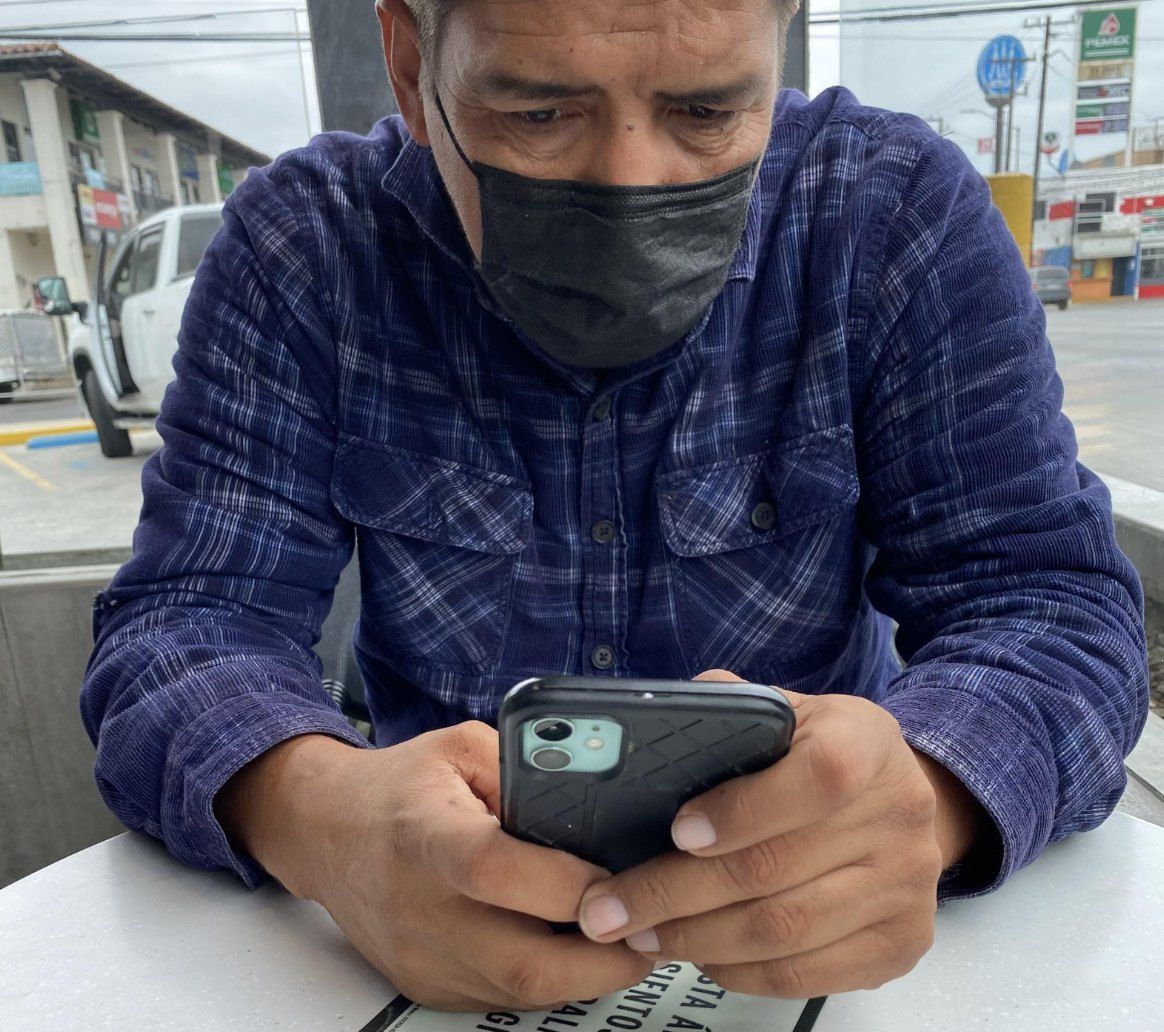
Asked if he perceives Amazon’s distribution center in Tijuana as a good thing, he pulls out his phone to show photos of residents of Colonia Cañon del Padre who are already working for Amazon.
“Yes, overall, I think it will be good for Tijuana. It’s already giving these people jobs even while it’s under construction.”
Still, Martinez shared concern for what could happen to those living in the housing settlement. Colonia Cañon del Padre is also known as Nueva Esperanza, or New Hope.
“It’s not regularized housing,” he laments, as he details how the electric meters seen in the community do not indicate individual electric access; the wiring is often dangerously split across multiple households.
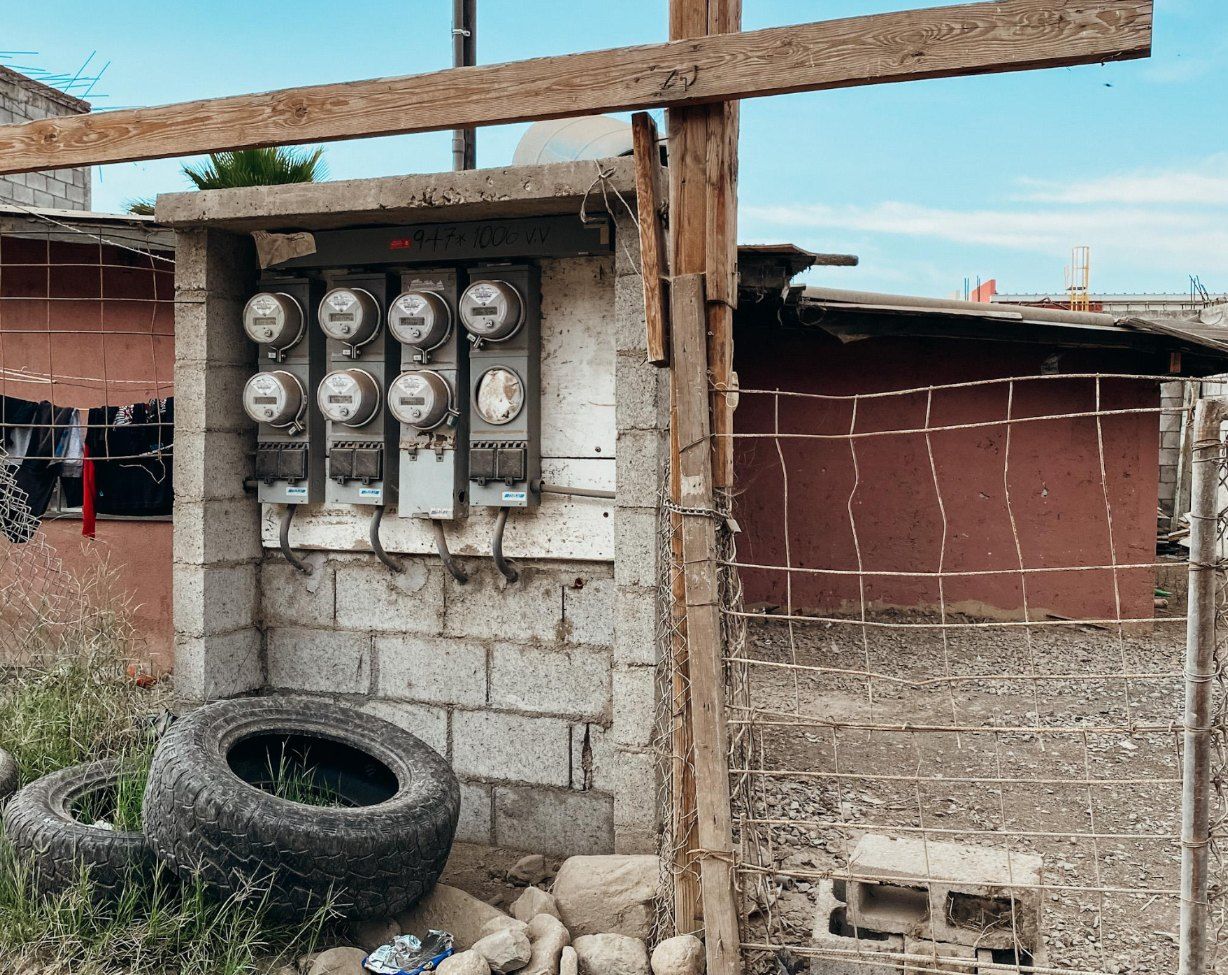
Access to electricity in Colonia Cañon del Padre is, ironically, an amenity that U.S. tent communities such as Skid Row in Los Angeles do not have.
Omar Martinez’s Instagram is filled with powerful photos, but it was his photos of the new Amazon facility that happened to catch the Internet’s attention and go viral. He hopes those who saw them will see the underlying issues as more than just poverty porn. Martinez emphasizes that such contrasts are not unique to Mexico or Tijuana, but are mundial, or global, as businesses expand and transnational trade grows, and as tariffs and trade embargoes steer corporations to new locations.
“You could find contrast like this anywhere — in India, or California, or Brazil — in any large city in the world.”
Dr. Ev Meade, an activist-scholar of cross-border studies and director of the new NGO Proceso Pacífico, notes that Martinez’s viral photos have “led to some interesting debates in the cross-border community.”
Such photos represent a recurring global phenomenon, but they also highlight an opportunity for financial growth and new jobs in Tijuana. Transnational business migration to Tijuana may also offer Amazon and other corporations an opportunity unique to Mexico: the Trump administration added tariffs to Chinese-made goods and the Biden administration left them in place, while Mexico remains open to Chinese foreign direct investment and to importing low-cost Chinese products. Those same tariffs — along with evolving supply chain issues — also make Mexico a more attractive producer and manufacturer for U.S. businesses.
Although Amazon currently employs over 15,000 workers in Mexico, the Tijuana distribution facility plans to hire only around 250 employees.
In this scenario, Amazon is just one of many foreign contenders trying to win in the Mexican market.
This Is Not a Maquiladora
Sociologist Chad Broughton, whose 12-year ethnographic study of Mexican border-town factories was published as Boom, Bust, Exodus: The Rust Belt, the Maquilas, and a Tale of Two Cities, said of the Tijuana Amazon facility, “it is magical thinking that markets solve all problems.”
Yet Broughton acknowledges that the Tijuana distribution center is a vastly different scenario from the maquiladoras he studied at the Reynosa-McAllen border. There, the maquiladora factories of Reynosa grew the population from under 200,000 to almost 1 million, as internal migration made the city grow faster than anyone expected.
In the case of Reynosa, neither government nor corporations showed initiative in solving the infrastructural crisis that such rapid growth created.
Tijuana already has plenty of maquiladoras — over 570, making it home to “the largest concentration of medical device manufacturers in all of North America and the largest concentration of aerospace maquiladoras in Mexico.”
As Americans grieve the disappearance of bygone company towns, they must be cognizant that, as the robots at Amazon’s Otay Mesa fulfillment center remind us, more manufacturing jobs have been outsourced to automation than to Mexican workers across the border.
According to Broughton, “economic integration has devalued the relationship between corporation and place.”
Thus the nostalgic era of company towns, and the promise of lifelong blue-collar jobs with benefits, is over; these aspects of American corporations did not migrate with the facilities that relocated to Mexico.
Invisible Layers
For global citizens who may never have been to Mexico, the aphorism that a picture is worth a thousand words obscures the many invisible layers carried in the viral images.
Invisible is the reality that this type of dystopian contrast is also present in many American cities, where tent cities abut high-tech corporate parks or luxury stores. Invisible is the reality that this type of community is an outlier, and not the norm for Mexican housing. For all of its sepia-toned, poverty-stricken representations in popular media, Mexico is also home to many multi-millionaires and billionaires, high-tech corporations, and majestic architecture. If one is compelled to compare Mexico and the neighboring United States, such judgments should come with the knowledge that while both nations have an expanding wealth gap, Mexico’s middle class is perhaps more robust than those unfamiliar with the region may realize.
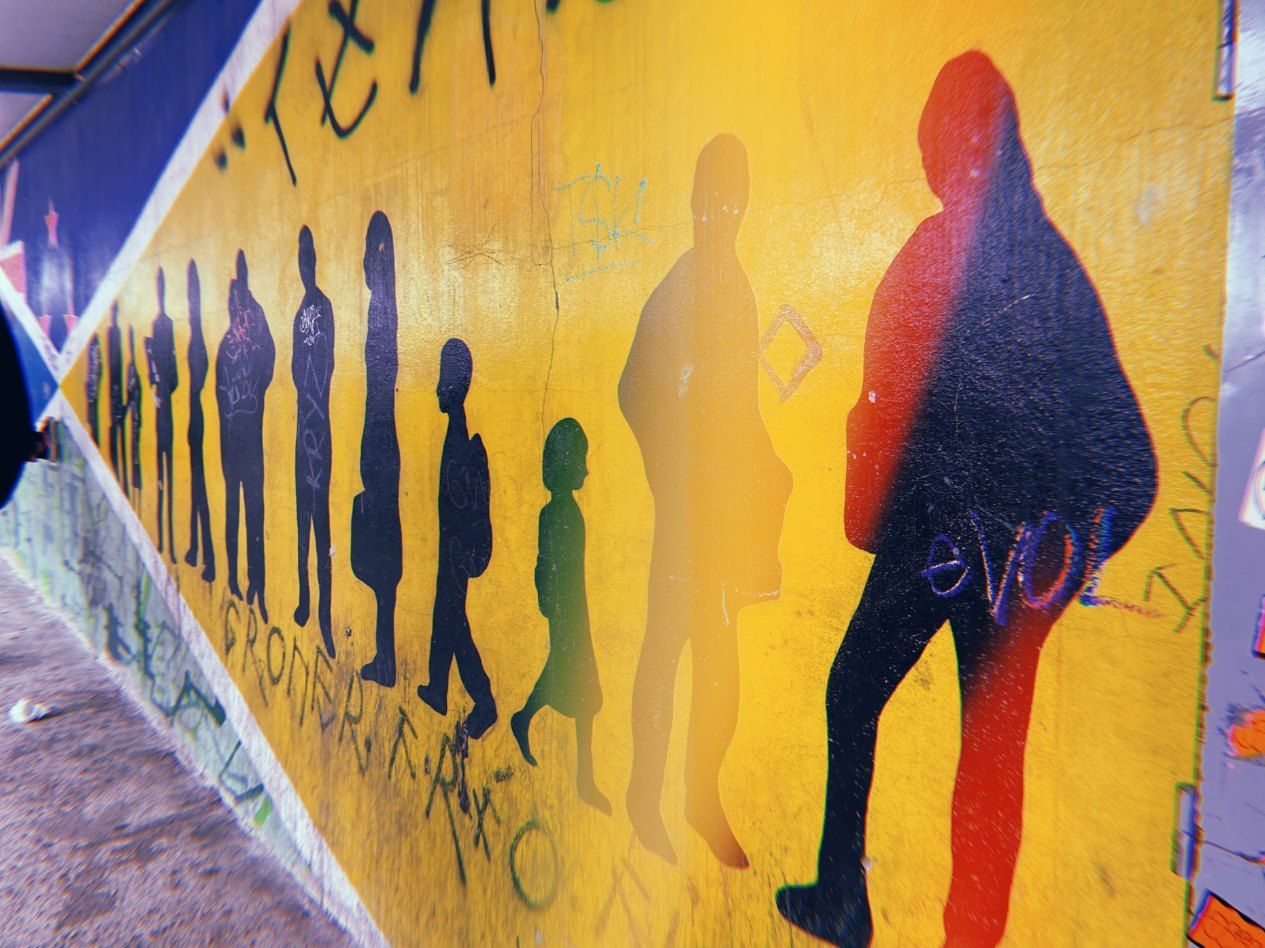
Perhaps most visible in this representation is the impact of globalized trade on a border town; still invisible is the way cross-border cities often share a unique symbiotic history and relationship.
Whereas the natural border of the Rio Grande undulates to divide border cities like El Paso from Ciudad Juárez, much of Tijuana’s northern edge is marked by the U.S. border wall, whose steel bollards extend into the Pacific Ocean. A brutalist metal wall demarcates what is Mexico and what is the United States — who can exist on which side, where, and when. Where the wall disappears into the landscape at the edges of Baja California state, Prevention Through Deterrence begins, the rough terrain serving as a naturally hostile barrier.
Tijuana is thus tied to the border in countless ways, and to its sister city, San Diego, where Otay Mesa is a growing sector of the metro area. It is through this lens that these images reveal unseen layers, like an anaglyph made alive by three-dimensional glasses.
It is the border and its laws that mean the five-mile distance between the Otay Mesa, California facility and the Tijuana, Baja California facility can take hours to navigate, not minutes. They mean that people who do the same job five miles apart will earn vastly different wages: $15 an hour in California, around $3 to $4 an hour in Tijuana. They mean that a Tijuana Amazon worker may never be permitted to cross legally into California, while an Otay Mesa worker can cross the Mexican border simply by showing a passport. They mean the border may be porous to products shipped back and forth, yet not porous to people.
Amazon TIJ1 has other neighbors than the residents of Colonia Cañon del Padre. It was not even the first distribution center to be built in this section: the newly constructed Vuori MX-DC warehouse flows into the shared pavement of Parque Industrial FINSA Alamar, which is also home to Jabil-Nypro, Welch Allyn/Hill-Rom, Qualtia Alimentos, Jones Sign, Baja Fur, Sanko, Norma Group, Avantti, Launchpad, Safariland, and Tecma. This aspect of the industrial park, untold in most of the journalism that followed the viral photo, reveals that the optical contrast is not just about Amazon.
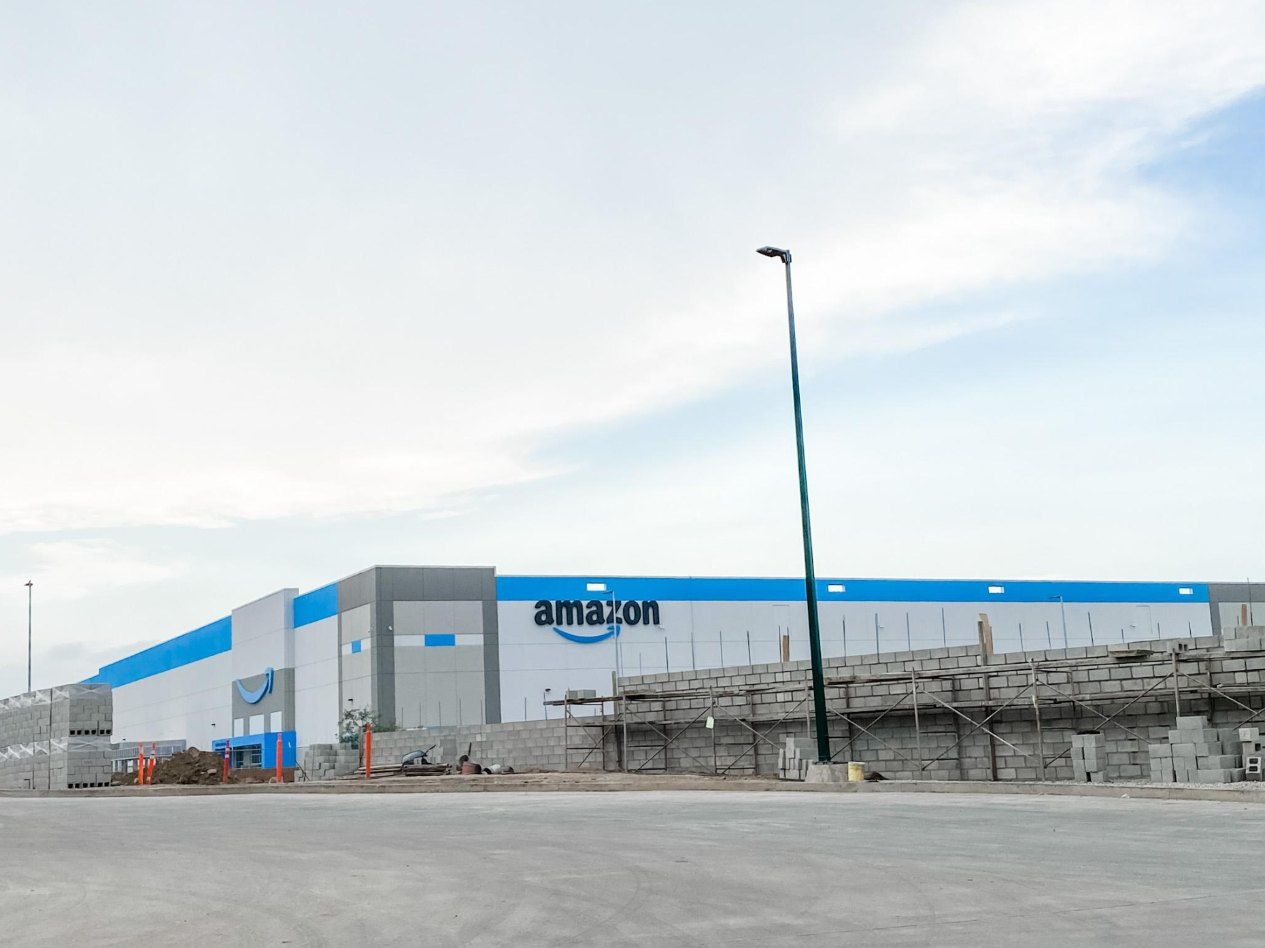
After convincing a guard to open the gate for an inside look at the Tijuana facility, Raquel Abigail Montelongo Rivera finishes her driving tour of the area and heads through a cloud of dust. Moments later, she points out the sudden transition into the new-construction homes of Colonia Lomas del Matamoros: reminiscent of a subdivision, filled with Spanish colonial style houses, grid-like in its layout, and home to over 4,000 people. Many of its residents cross the U.S. border for work, returning home to pay rents of nearly $700 USD per month, or to buy for around $250,000, with wages earned in U.S. dollars.
“It may not be expensive in the U.S., but in this area of Tijuana it’s surprisingly a lot,” says Rivera, as she drives through the neighborhood. “It’s because they work in the United States.”
When asked if she has a visa to the United States, Rivera answers without hesitation.
“No, and it was expensive because I applied for both myself and two of my children at the same time.”
Since 2017, anecdotally, visa denials have been increasing for Mexicans applying for visitor or work visas to the United States, where the non-refundable fee retained at the U.S. consulate can run up to $250 per application.
For a family submitting three applications from the Tijuana side, that is a heavy price to pay only to be denied. For a new Amazon hire from Colonia Cañon del Padre, it adds up to over a month’s wages working full time.
“For Tijuana, I really think this is a good thing. Just like any new business,” Rivera notes.
From Tijuana TIJ1 to Otay Mesa SAN3 and Back
It is possible to walk from the Mexican border at the Otay Mesa pedestrian crossing to Amazon’s brand-new Californian facility: forty minutes according to the map, thirty at a rapid pace.
It is even possible to walk directly from the SAN3 facility in Otay Mesa to TIJ1 in Tijuana — a sweaty, dusty journey that crosses the border and the Tijuana River, traverses areas of dubious safety, and leaves even the eager pedestrian breathless after a fair number of steep hills.
Amazon’s Otay Mesa SAN3 distribution facility held its official launch one week ago, and colorful signs create the appearance of an exciting, welcoming environment for new workers. The scent of fresh mulch perfumes the exterior, olfactory evidence of just how recently the landscaping was installed.
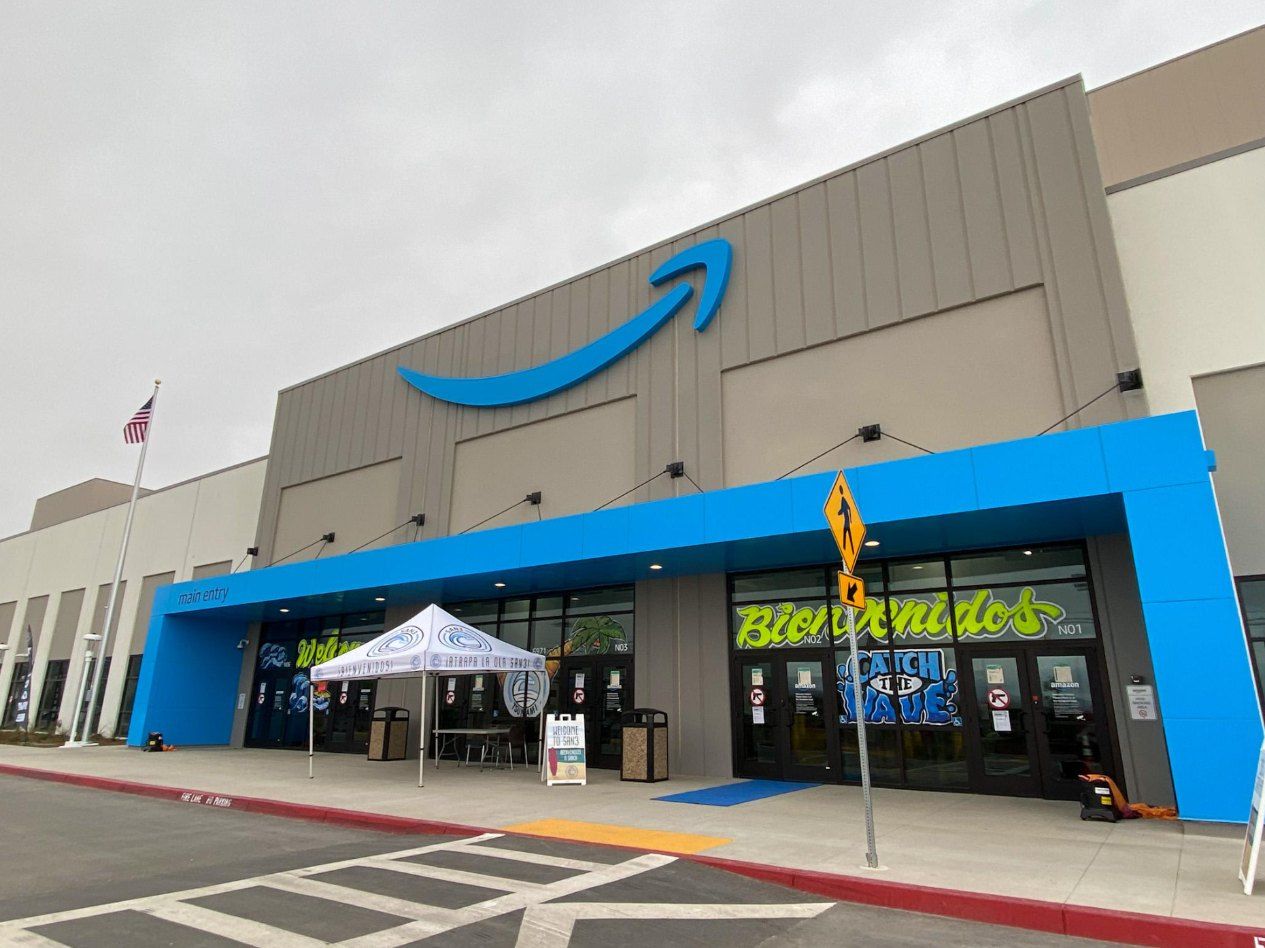
On a Sunday afternoon less than a week after opening, Amazon’s massive complex was relatively empty, with only one section of the lot filled for the day. Most license plates declared their provenance as California, but a few Baja California, Mexico plates were also present. Perhaps these belonged to some of the Tijuanans working on the San Diego side who, Rivera had said, could afford the more expensive housing in Colonia Lomas del Matamoros.
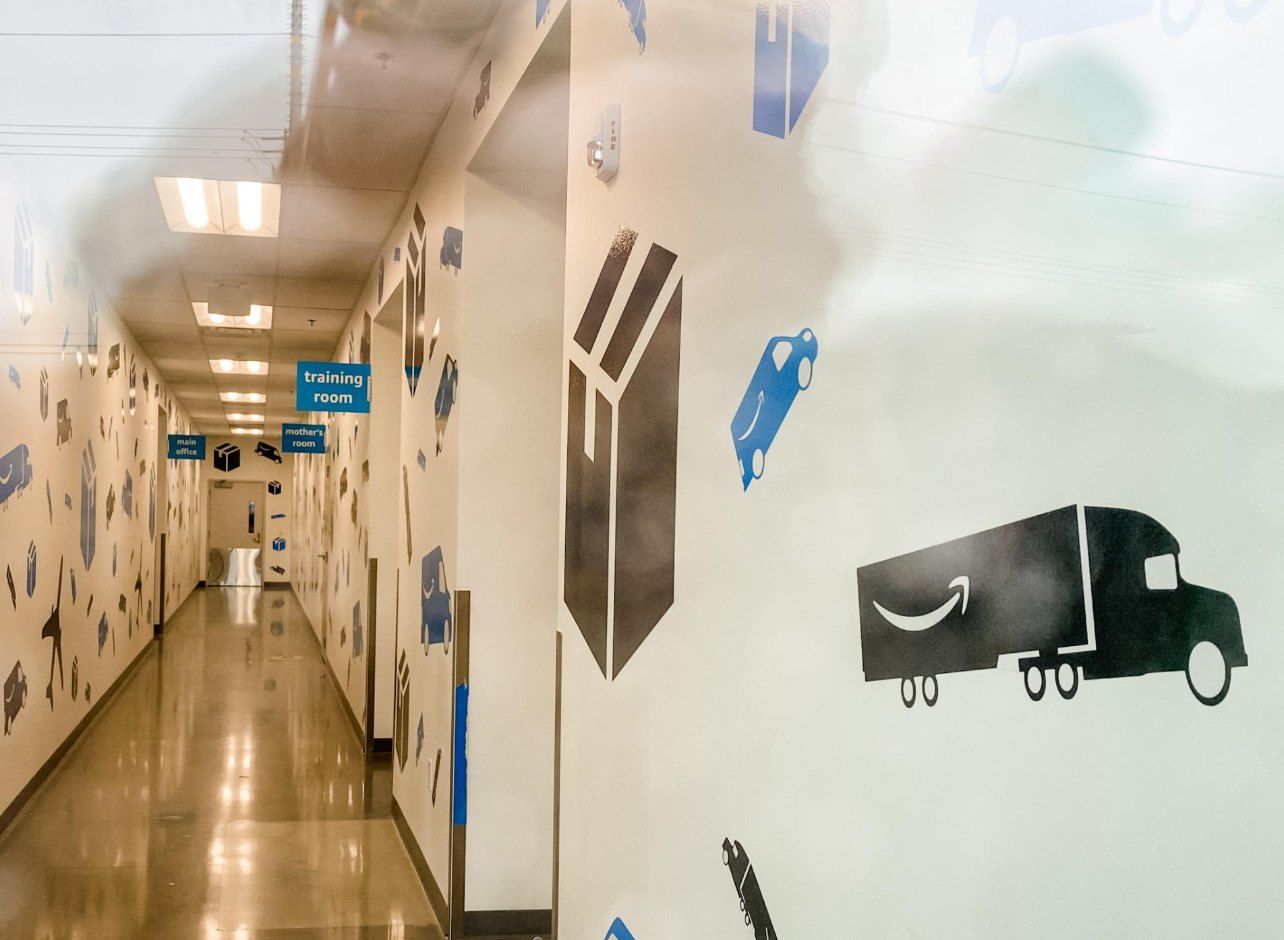
Signs welcome new workers in both Spanish and English, with demarcated standing spots extending along the right exterior of the building. Inner corridors revealed immaculate branding, and even a room to accommodate breastfeeding mothers.
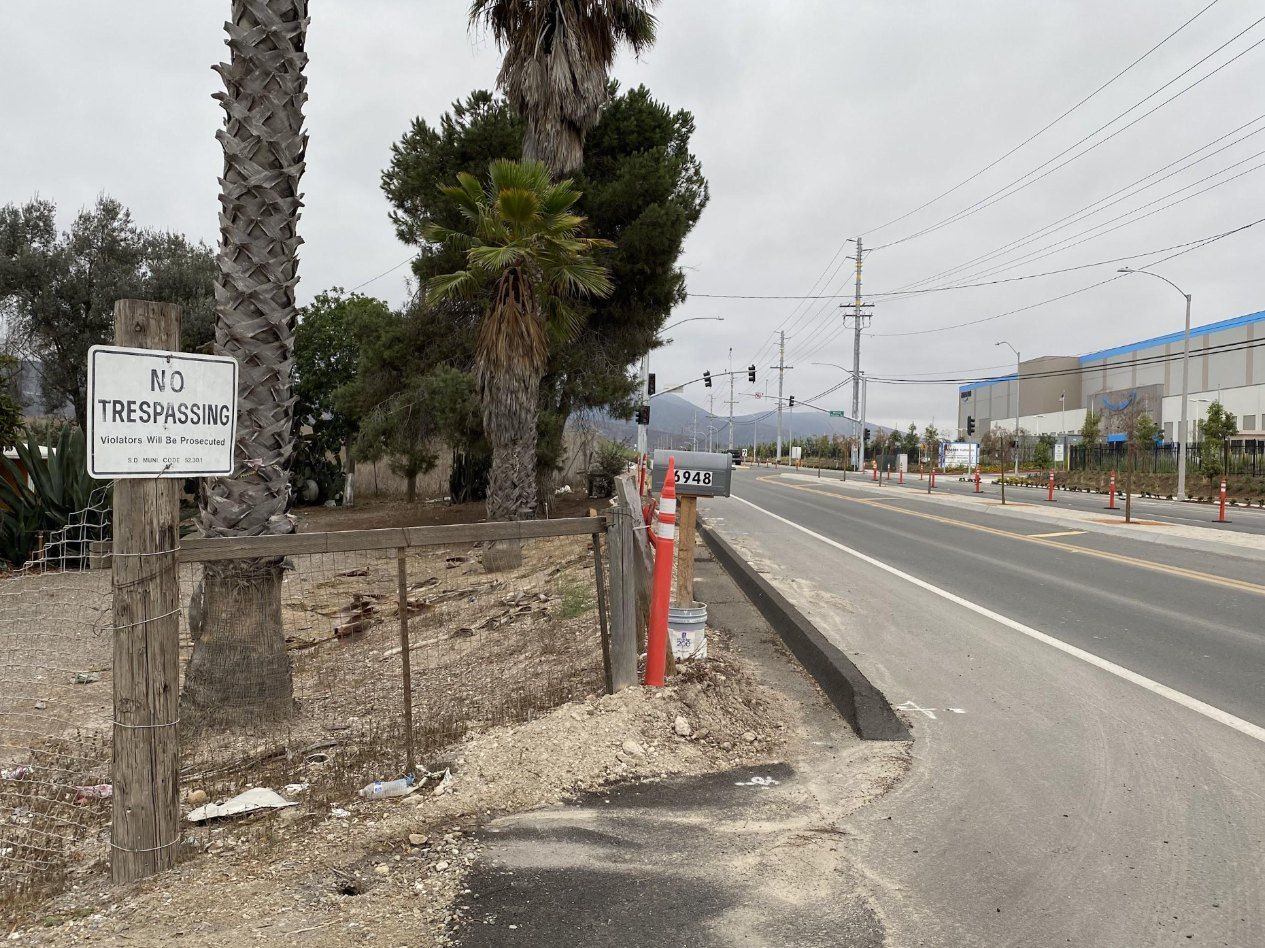
Located just past one of Costco’s distribution facilities, Otay Mesa SAN3 is mostly an industrial island in a sea of scrub grass, its perimeter lined with newly constructed roads, sidewalks, and bike paths. But across the street, weathered houses offer a visual contrast on the American side of the border too. It is different, for sure, but “No Trespassing” signs are posted beside dilapidated chain-link fencing here as well, where a couple of roosters add the only disturbance to the otherwise silent road and the distant hum of the facility. Residents across from Otay Mesa SAN3 say they are also concerned about the changes.
A New Hope or a Repeated Pattern for Workers’ Rights?
Omar Martinez’s viral photos of Tijuana TIJ1 and the utopian atmosphere at Otay Mesa SAN3 are part of a larger picture of workers’ rights as well. In Mexico specifically, Amazon has a history of worker exploitation and of relying on a subcontracted workforce, a practice that has been endemic in the country for years. Workers’ rights advocates in Mexico have been pushing for laws that offer better protection and benefits to workers classed as either informal or formal. That pressure led to the passing of what is known as the Reform on April 23, 2021, which many hope will protect workers such as the ones Tijuana TIJ1 will hire.
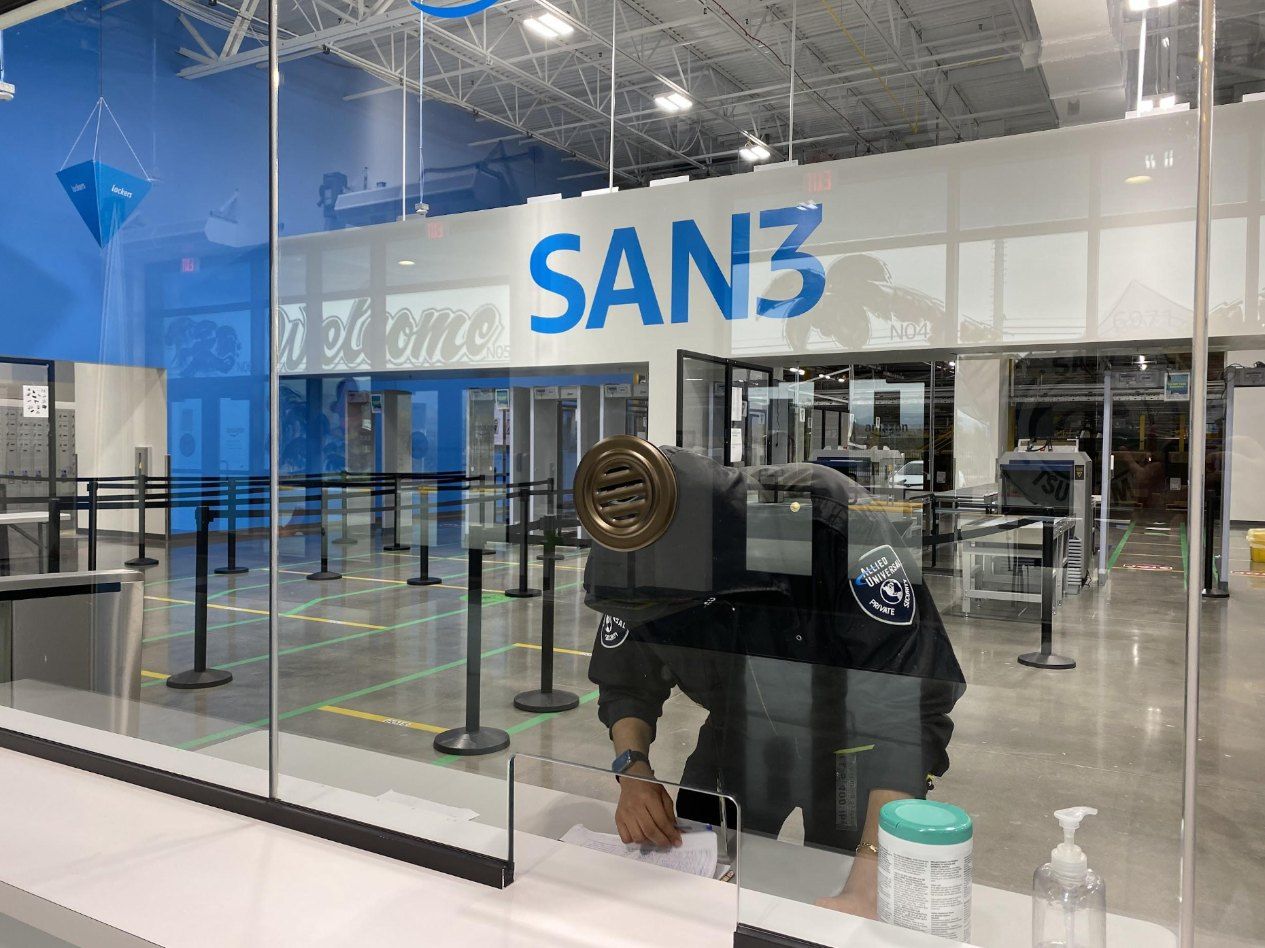
As of September 2021, Otay Mesa SAN3 and Tijuana TIJ1 are so new that neither is yet visible on Google’s satellite imaging of either area.
Because the Tijuana facility is not yet completed, it is hard to tell whether it will offer some of the amenities that Otay Mesa SAN3 claims to offer its employees. The surrounding infrastructure is still under construction as well.
What is known is that worker exploitation is a problem in Mexico, and that Amazon has had a problem with worker exploitation everywhere it has expanded its business.
With a fresh start, perhaps the mark that both distribution centers make on their communities, the region, and the map can be a positive one.
And perhaps a new hope for Tijuana.
Write to the author Responses come to Keren privately by email.
Reported in September 2021; first published here in November 2026.
© Keren Threlfall. To reprint or use this work, write to keren@kerenthrelfall.com.
How to cite this pieceThrelfall, Keren. “A Photo of a New Amazon Facility in Tijuana Went Viral as “The Most Dystopian Image of the Year”: But there’s more to the story than meets the eye..” kerenthrelfall.com, September 2021. https://kerenthrelfall.com/writing/amazon-tijuana-most-dystopian-image