Writing · Essay
Barbarian or Civilized?
What Hitler’s Art and Aztec Advancement Can Teach Us About Ourselves
By Keren ThrelfallFall 201919 min read

In the German series Charité at War there is a scene in which the surgeon Ferdinand Sauerbruch puts on a record.1 Bach’s “Air on the G String” begins to play, and he turns to his visitor, the French physician Adolphe Jung, with a question: “A nation that created music like that cannot be completely lost, can it?” — Ein Volk, das solche Musik hervorbringt, kann nicht ganz verloren sein, oder? Sauerbruch is a man caught in the middle: a medical innovator and head of surgery at the Charité in Berlin, and also a subject of Nazi orders.2 The question sounds rhetorical, asked more to palliate his own conflict than to persuade his guest. The historical Sauerbruch never joined the Party; he also accepted its National Prize, sat on the council that funded its research, and after the war was charged and acquitted for want of evidence.3 Historians have not finished arguing about him, which is rather the point.
The Rubric We Keep
It is also a question that society — Western society, anyway — asks of itself quite often. We curate our own advancements into a standing rubric against which every other society is measured, perhaps because we believe we hold the monopoly on technology and civility. Surely technological, artistic and economic achievements like these are the marks of the most advanced of civilizations?
And yet when an inventory of the same achievements in another civilization threatens our own ranking, the achievements stop carrying such weight. We invert the scale, and violence becomes the sure sign of barbarism. Sauerbruch’s pensive question turns over with it: a nation that committed such atrocities surely cannot be civilized, can it?
“Surely, never were refinement and the extreme of barbarism brought so closely in contact with each other.”4
Montaigne saw the trick more than four centuries ago, when the first reports of the Americas were still arriving in France: “every one gives the title of barbarism to everything that is not in use in his own country.”5 The word itself had been a weapon long before him. Barbarian began as a complaint about someone else’s language — to Greek ears, foreigners said only bar, bar — and by the time Aristotle had finished with it, the barbarian and the slave were by nature one and the same, which made the Greek the natural master of both.6 From the first, the barbarian was the person whose account we could not, or would not, understand; and from very nearly the first, the word was doing the work of a deed of ownership.
The Trial at Valladolid
Take the modern view of the great civilizations of the pre-Columbian Americas: the Inca, the Maya and the Aztec. They are dismissed the moment we are able to recoil at the thought of human sacrifice. The Spanish invaders of the sixteenth century inflated the number of those sacrifices to justify their own violence, but the evidence that ritual killing took place is clear, and the excavated skull rack beside the Templo Mayor has only made it clearer.7 And so, with no more thought, we strike them from the roster of advanced civilizations.
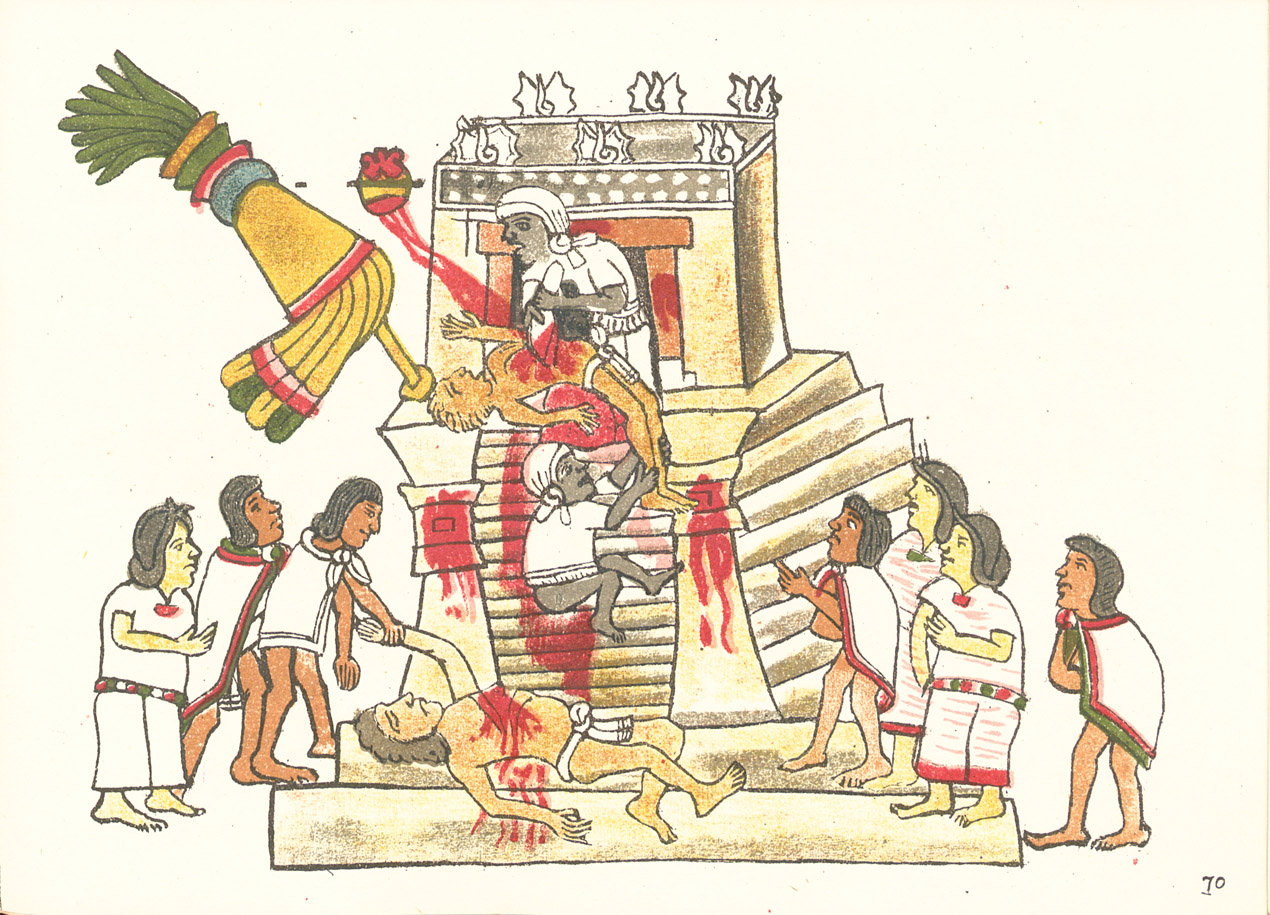
The argument has in fact been to court. In 1550 the Spanish crown suspended its conquests and convened a panel of jurists and theologians at Valladolid to decide whether the wars already fought in the Americas had been just. Juan Ginés de Sepúlveda, who had never crossed the Atlantic, argued from Aristotle that the Indians were natural slaves, and he offered human sacrifice as his best evidence: a people who did such things had forfeited the right to govern themselves. Against him stood Bartolomé de las Casas, who had spent the better part of his life there, and who made the argument that still has the power to shock — that sacrifice, however mistaken, was the act of a people offering to their gods the most precious thing they possessed, and was therefore proof of religious seriousness and not of its absence.8 The judges never issued a verdict; the conquest resumed all the same, and I do not think the West has issued one since.
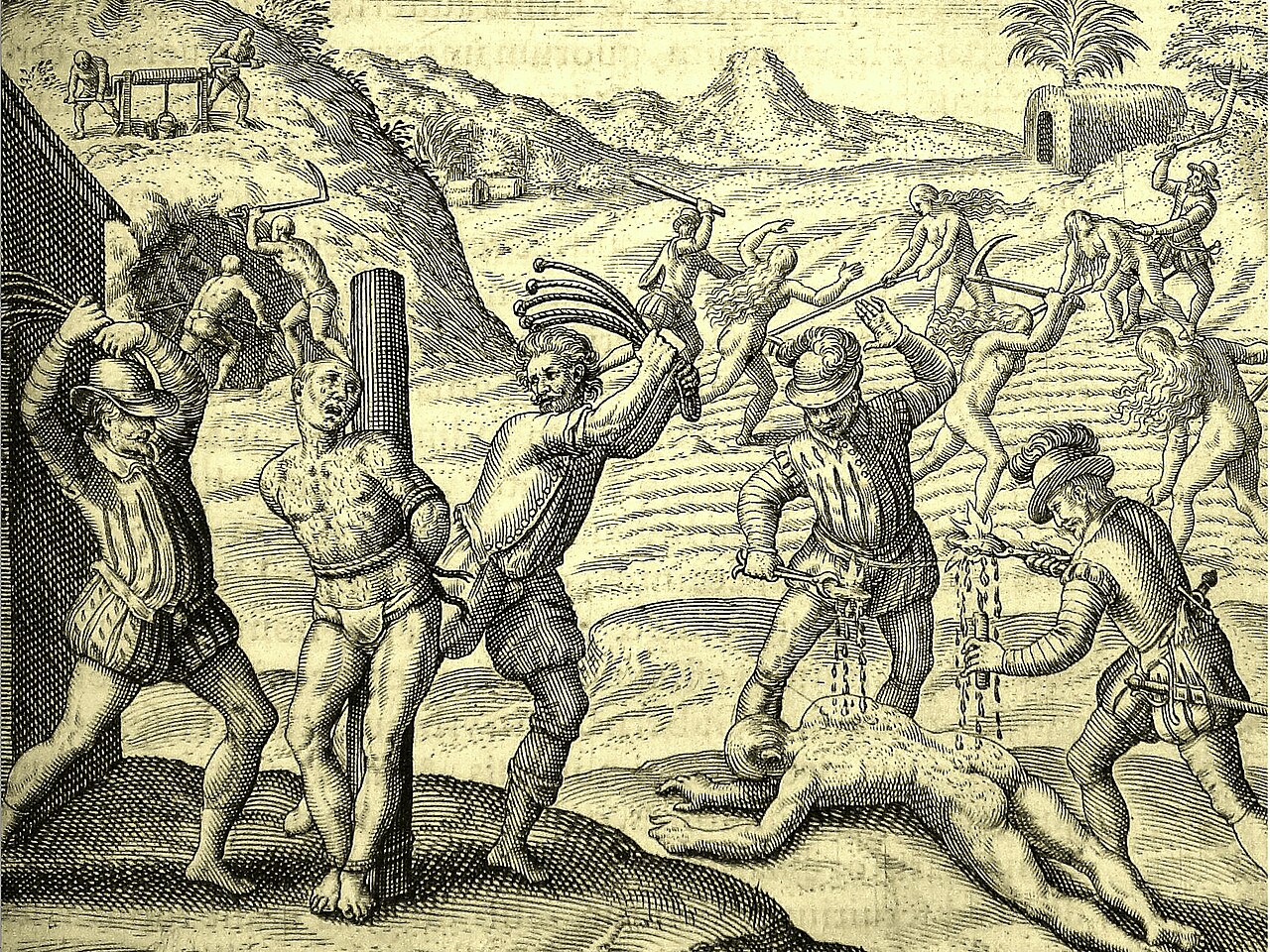
But there are many ways to kill a man, and many ways to make certain men a sacrifice; many ways to make a man suffer that do not take place upon an altar, at the top of a temple’s highest steps, and that do not make his death immediate or sudden. Las Casas knew this better than anyone in the room at Valladolid, for he had watched it: the encomienda that worked whole villages to death, the mines, the hunger — a slow offering made to no god at all, and never once called by its name.9 Montaigne, weighing the same reports from the New World, thought that “there is more barbarity in eating a man alive, than when he is dead,” and he meant the rack and the stake of his own countrymen; and Judith Shklar, following him four centuries later, argued that if we are to rank the vices at all we ought to put cruelty first — ahead of impiety, ahead of every offense against gods or customs — since cruelty is the one evil whose victim is always another creature who can suffer.10 By that measure, the question to ask of a civilization is not how did it kill? but rather how much suffering did it require, and of whom, and for how long? It is a measure that very few empires survive.
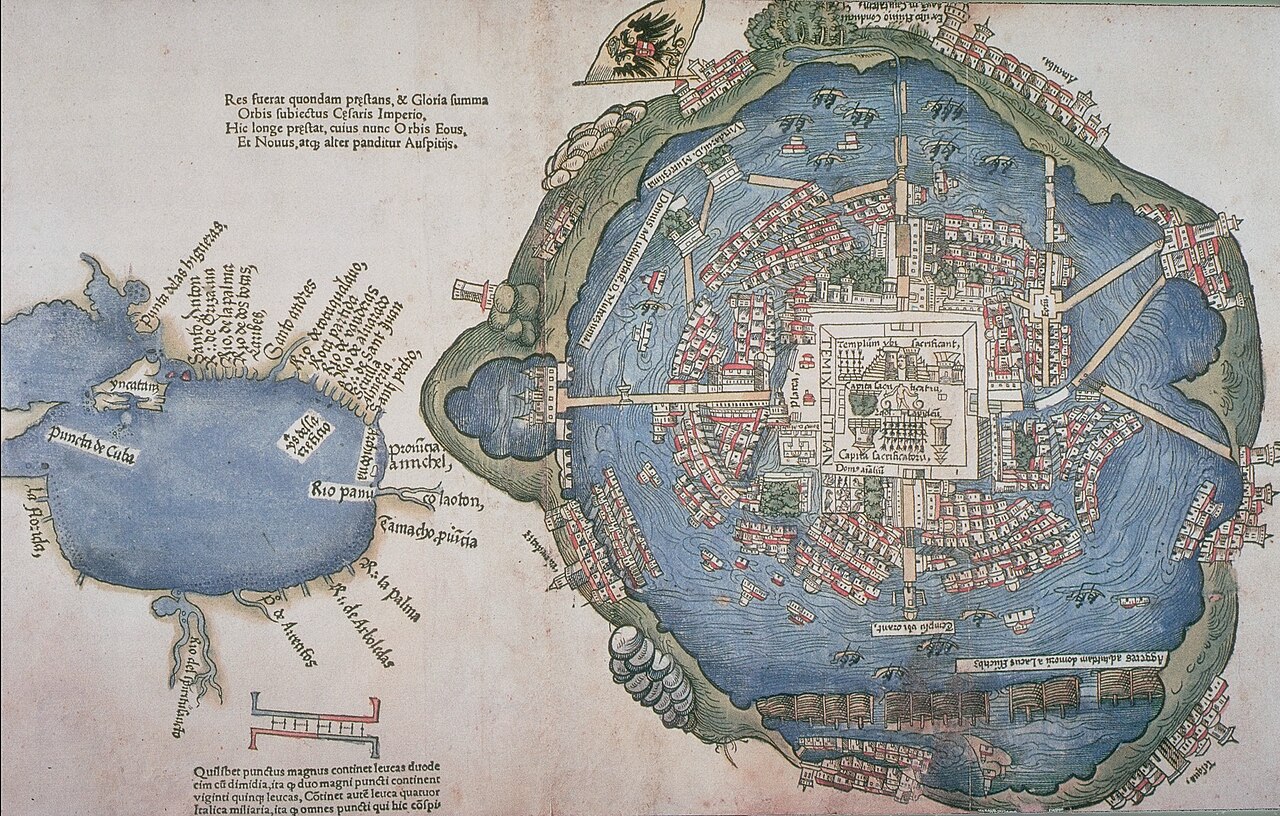
The dead of Tenochtitlan were counted by the men who killed Tenochtitlan. Nearly everything the West believes about Aztec sacrifice was set down by conquistadors, or gathered by friars working in the conquest’s wake; the prosecution supplied the evidence, and the conquered were tried in the conqueror’s archive. The same witnesses left another testimony, which is quoted far less often. The city they marched into held, by modern estimates, some two hundred thousand people — more than any city in Spain — and Bernal Díaz remembered that “some of our soldiers asked whether it was not all a dream.”11 Walter Benjamin, writing in flight from the regime that Sauerbruch served, held that every monument of civilization is at once a record of barbarism, and that the manner in which it is handed down from one owner to the next is no cleaner.12 The archive of the conquest is such a monument.
Sacrifice and Massacre
Yet the societies doing the recoiling keep ledgers of their own: 416,800 American soldiers dead in the Second World War; six million Jews, and millions of others, systematically murdered in the Holocaust; more than 180,000 civilians documented killed in the American-led war in Iraq.13 Religions across the world carry the sacrificial and the sanguinary somewhere within them. Almost ironically, the Catholicism for which Cortés claimed to crusade held both at its center: a body broken and blood poured out, offered again at every altar the conquest raised.
The difference is kept in the vocabulary. When they killed, it was sacrifice. When we kill, it is casualties, collateral damage, the price of freedom. The Mexica named what they were doing, staged it at the center of the city, and built a cosmology to account for the debt.14 (Nietzsche noticed that in his own language the word for guilt and the word for debt are the same word, and built half a book upon it.)15 We prefer our dead offstage and our altars unmarked.
Tzvetan Todorov gave the two arrangements names. The Aztecs, he wrote, were a sacrifice society: the killing was public, ritual, performed in the name of an official ideology, and claimed. The Spaniards who destroyed them belonged to a massacre society: the killing was done far from home, where the law did not reach, and its perpetrators would have denied that it had any meaning at all. The first belongs to the city and the temple; the second to the frontier and the colony — and it is the second, he observed, that was the modern invention.16 René Girard would add that no society has ever done without its victims, only without admitting to them, and Giorgio Agamben that the characteristic figure of our own politics is precisely the person who may be killed and yet not sacrificed: the life that can be taken without the taking counting as anything.17 Achille Mbembe’s name for the power to arrange this is necropolitics.18
I am not sure which arrangement is the more honest. I am sure it is not obviously ours.
The Arithmetic and Its Limits
It is tempting to settle the matter by arithmetic: line up the dead and let the larger number lose. I have just done it. But a body count is a utilitarian instrument, Bentham’s calculus with the pleasure taken out, and it fails here in the two ways that utilitarianism tends to fail.19
The first objection is categorical. Some acts are wrong whatever the tally, and a sacrifice is not redeemed by being smaller than a genocide. Kant’s way of putting it was that whatever has a price can be replaced by something else as its equivalent, while a person has no price but rather a dignity; and the philosophers’ trolley, which asks us whether we would turn the car onto one man to spare five, has lasted as long as it has because most of us discover, somewhere between the lever and the footbridge, that we are not prepared to do the sum.20 Bernard Williams sharpened the point with a traveler who is told that if he will shoot one prisoner with his own hand, nineteen others will be spared. The arithmetic is not in doubt. What the arithmetic cannot see is that it matters who does the killing, and that a man is not merely a channel through which the best available total flows.21 Every priest on the summit of the Templo Mayor, and every pilot above a city, has been offered some version of that bargain.
The second objection is that there is no common currency — no objective way to weigh a heart offered on a temple summit against a child beneath a collapsed building. Isaiah Berlin spent a career insisting that human goods are plural and cannot always be ranked upon a single scale; the same must be said of human evils.22 The ledger does not acquit the Aztecs. It only takes away our standing to prosecute.
Life is so much less complicated when we can see it in black and white. Is the tendency intellectual laziness, or merely human instinct? Perhaps the answer, like the solution to the problem, is more nuanced than binary.
The Man Who Loved Children
I’ll never forget a conversation in which I casually mentioned that Hitler was known for loving children. Somehow the appearance of that lesser-known fact caused personal offense.
The offense deserves a better answer than I gave it then. Known for is the operative phrase. The fondness was, before it was anything else, a manufactured image. In 1934 his photographer, Heinrich Hoffmann, published Jugend um Hitler — “Youth around Hitler” — a picture book of the Führer bending toward small children, and the same photographs went out across the Reich as postcards.23 A leader who could not be shown as a husband or a father was shown as every child’s uncle. The curators who now keep those pictures observe that the propaganda cared not at all who the child in the frame was.
One of the children had a name. Bernile Nienau was photographed with him at the Berghof, and Hoffmann’s camera made her the Führer’s child. She had a Jewish grandmother. When that became known, Martin Bormann ordered the family kept away and the pictures withdrawn, and later printings put other girls in her place.24 The regime that sold those postcards murdered about one and a half million Jewish children, and killed some ten thousand German children with disabilities in its own hospitals.25
The tenderness had other objects, too, and they are no easier to look at. Within its first year in power the same government passed what was then among the most comprehensive animal protection laws in the world, and its leaders spoke of cruelty to animals with a disgust they did not extend to people.26 It opened a vast House of German Art, and a day later an exhibition of the art it meant to destroy, so that the public might be taught the difference.27 The landscape at the top of this page is attributed to the same man, who twice asked the Academy of Fine Arts in Vienna to make him a painter and was twice refused.28
So the fact is true in the worst way. Whatever tenderness there was did not contradict the killing; it kept company with the killing, and was put to work for it. George Steiner, who could not leave the problem alone, put it as the fact with which any defense of the humanities now has to begin: we know that a man can read Goethe in the evening, and play Bach, and go to his day’s work at Auschwitz in the morning.29 That is Sauerbruch’s question, answered. Theodor Adorno and Max Horkheimer had already drawn the harder conclusion, that the barbarism was not a relapse from enlightenment but rather one of the things enlightenment had learned to do; and Zygmunt Bauman, half a century on, that the Holocaust was not a failure of modern civilization but one of its products, needing the railway timetable, the filing cabinet and the division of labor every bit as much as it needed hatred.30
We want our monsters to be monsters all the way through, because a beast is no relation of ours. Hannah Arendt went to Jerusalem expecting a monster and reported a clerk.31 A society, an individual or a civilization can at once be barbaric and refined — and the refinement is not a disguise. That is the unbearable part.
To Understand, or to Excuse
There is one more difficulty, and it is the one I feel most each time I teach myself something new about either the Mexica or the Reich. Primo Levi, who survived Auschwitz, warned that one perhaps cannot, and what is more must not, understand what was done there, because to understand is very nearly to justify.32 I have taken that warning seriously for years. And yet the historian from whom I learned the most about Aztec sacrifice, Inga Clendinnen, went on to write a second book, about the Holocaust, arguing the opposite: that to declare any human action beyond understanding is to hand its perpetrators a kind of victory, and to excuse ourselves from the labor of knowing what people like us are able to do.33
I do not think the two can be reconciled, and I am no longer sure they should be. To study the Aztecs with sympathy is to risk explaining a killing away; to refuse the sympathy is to do what Sepúlveda did. To study Hitler’s watercolors is to risk the obscenity of finding something in them; to refuse is to pretend that he arrived from somewhere other than an art school’s waiting room, a boarding house, a culture of concerts and museums — which is to say, from somewhere other than us.
The Questions
That leaves the question at the heart of civilization, and a few I have collected since.
What makes a society civilized, and what makes it barbaric? At what point is the line drawn between these two names for humanity — and who is holding the pen?
Who keeps the ledger of a people’s violence, and who audits the auditor?
What does a society do with its killing: name it and stage it, or rename it and hide it? And which of those should we fear more?
Is it better to be the priest who believes in the sacrifice, or the clerk who believes in nothing but the schedule?
If the dead cannot be weighed against one another, on what ground does any of us condemn — and if they can, who among us would care to be weighed?
Can we understand a perpetrator without acquitting him? And what does it say about us if we cannot bear to try?
What would it take to hear Sauerbruch’s question and its inversion as a single question — to say of the same nation, in the same breath, that it made that music and did those things?
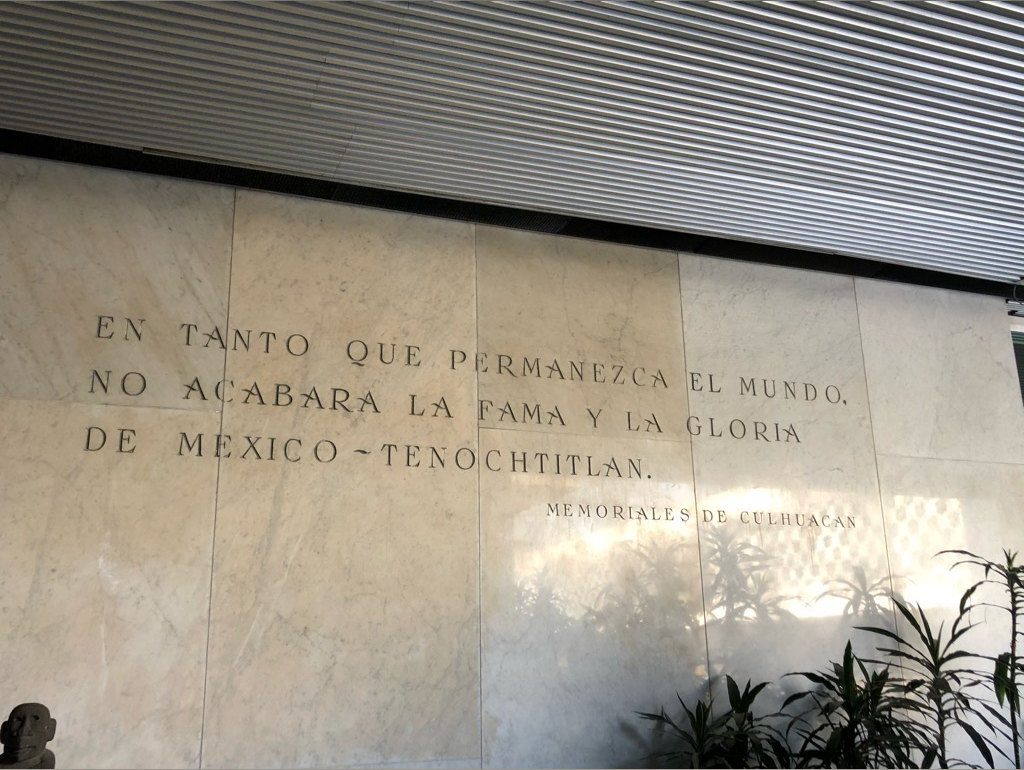
Civilization may be less a rank a society attains than a story it tells about itself. The better test of the story is what it has to leave out.
Notes
1. Charité at War, episode 2. The series was first broadcast in Germany in 2019 as the second season of Charité and streams on Netflix under this title; Ulrich Noethen plays Sauerbruch and Hans Löw plays Jung.
2. A rabbit trail: I once had surgery in this very hospital system. German healthcare and the Charité are such long-standing edifices of Berlin that the hospital has not one but two television series about it. The Charité was founded in 1710, which makes it older than the United States Constitution.
3. Sauerbruch received the German National Prize for Art and Science in 1937 and joined the Reich Research Council in the same year; he also belonged to the Wednesday Society, several of whose members were executed after the plot of July 20, 1944, and was himself interrogated by the Gestapo. An Allied denazification proceeding opened against him in October 1945 ended in acquittal. For the debate, see Marc Dewey et al., “Ernst Ferdinand Sauerbruch and His Ambiguous Role in the Period of National Socialism,” Annals of Surgery 244, no. 2 (2006): 315–21.
4. William H. Prescott, History of the Conquest of Mexico (Harper and Brothers, 1843), quoted in Inga Clendinnen, Aztecs: An Interpretation (Cambridge University Press, 2014), 4.
5. Michel de Montaigne, “Of Cannibals” (1580), in Essays, trans. Charles Cotton (1685–86).
6. Aristotle, Politics 1.2, 1252b, where the philosopher quotes with approval the poets’ line that it is fitting for Greeks to rule over barbarians.
7. Lizzie Wade, “Feeding the Gods: Hundreds of Skulls Reveal Massive Scale of Human Sacrifice in Aztec Capital,” Science, June 21, 2018, reporting the excavation of the Huey Tzompantli in Mexico City.
8. Lewis Hanke, All Mankind Is One: A Study of the Disputation between Bartolomé de las Casas and Juan Ginés de Sepúlveda in 1550 on the Intellectual and Religious Capacity of the American Indians (Northern Illinois University Press, 1974); Bartolomé de las Casas, In Defense of the Indians, trans. Stafford Poole (Northern Illinois University Press, 1974).
9. Bartolomé de las Casas, A Short Account of the Destruction of the Indies (1552), trans. Nigel Griffin (Penguin Classics, 1992).
10. Montaigne, “Of Cannibals”; Judith N. Shklar, “Putting Cruelty First,” in Ordinary Vices (Harvard University Press, 1984).
11. Bernal Díaz del Castillo, The Conquest of New Spain, trans. J. M. Cohen (Penguin Classics, 1963), 214. For the population, see Michael E. Smith, “City Size in Late Postclassic Mesoamerica,” Journal of Urban History 31, no. 4 (2005): 403–34; published estimates run from about 200,000 to 250,000, at a time when the largest Spanish cities numbered in the tens of thousands.
12. Walter Benjamin, “Theses on the Philosophy of History” (1940), thesis VII, in Illuminations, ed. Hannah Arendt, trans. Harry Zohn (Schocken Books, 1968).
13. National WWII Museum, “Research Starters: Worldwide Deaths in World War II”; United States Holocaust Memorial Museum, “How Many People Did the Nazis Murder?,” Holocaust Encyclopedia; Iraq Body Count, which records documented civilian deaths from violence since the 2003 invasion.
14. On sacrifice as a debt owed to the gods and as the ordering principle of the Aztec city, see Davíd Carrasco, City of Sacrifice: The Aztec Empire and the Role of Violence in Civilization (Beacon Press, 1999).
15. Friedrich Nietzsche, On the Genealogy of Morals (1887), second essay, on Schuld (guilt) and Schulden (debts).
16. Tzvetan Todorov, The Conquest of America: The Question of the Other, trans. Richard Howard (Harper and Row, 1984), which distinguishes “sacrifice-societies” from “massacre-societies.” First published in French in 1982.
17. René Girard, Violence and the Sacred, trans. Patrick Gregory (Johns Hopkins University Press, 1977); Giorgio Agamben, Homo Sacer: Sovereign Power and Bare Life, trans. Daniel Heller-Roazen (Stanford University Press, 1998).
18. Achille Mbembe, “Necropolitics,” trans. Libby Meintjes, Public Culture 15, no. 1 (2003): 11–40.
19. Jeremy Bentham, An Introduction to the Principles of Morals and Legislation (1789), chap. 4.
20. Immanuel Kant, Groundwork of the Metaphysics of Morals (1785), 4:434–35. The trolley is Philippa Foot’s, from “The Problem of Abortion and the Doctrine of the Double Effect,” Oxford Review 5 (1967): 5–15; the footbridge was added by Judith Jarvis Thomson.
21. Bernard Williams, “A Critique of Utilitarianism,” in J. J. C. Smart and Bernard Williams, Utilitarianism: For and Against (Cambridge University Press, 1973).
22. Isaiah Berlin, “The Pursuit of the Ideal,” in The Crooked Timber of Humanity: Chapters in the History of Ideas, ed. Henry Hardy (John Murray, 1990).
23. Heinrich Hoffmann, Jugend um Hitler (Munich, 1934). On the book, the postcards and their purpose, see Documentation Center Nazi Party Rally Grounds, Nuremberg, “Adolf Hitler with a Young Girl,” and “The Führer and Youth (Adolf Hitler with a Little Girl), Postcard (1933),” German History in Documents and Images.
24. Documentation Center Nazi Party Rally Grounds, “Adolf Hitler with a Young Girl,” which recounts the case of Bernhardine (“Bernile”) Nienau.
25. United States Holocaust Memorial Museum, “Children during the Holocaust,” Holocaust Encyclopedia.
26. The Reich Animal Protection Act (Reichstierschutzgesetz) of November 24, 1933. See Arnold Arluke and Boria Sax, “Understanding Nazi Animal Protection and the Holocaust,” Anthrozoös 5, no. 1 (1992): 6–31.
27. The Great German Art Exhibition and the “Degenerate Art” exhibition opened in Munich on consecutive days in July 1937. See Stephanie Barron, ed., “Degenerate Art”: The Fate of the Avant-Garde in Nazi Germany (Los Angeles County Museum of Art, 1991).
28. The Academy turned him down in 1907 and again in 1908. See Ian Kershaw, Hitler, 1889–1936: Hubris (W. W. Norton, 1998), chaps. 1–2.
29. George Steiner, Language and Silence: Essays on Language, Literature, and the Inhuman (Atheneum, 1967), preface.
30. Max Horkheimer and Theodor W. Adorno, Dialectic of Enlightenment (1947), trans. Edmund Jephcott (Stanford University Press, 2002); Zygmunt Bauman, Modernity and the Holocaust (Cornell University Press, 1989).
31. Hannah Arendt, Eichmann in Jerusalem: A Report on the Banality of Evil (Viking Press, 1963).
32. Primo Levi, afterword to If This Is a Man and The Truce, trans. Stuart Woolf (Abacus, 1987).
33. Inga Clendinnen, Reading the Holocaust (Cambridge University Press, 1999).
Bibliography
Agamben, Giorgio. Homo Sacer: Sovereign Power and Bare Life. Translated by Daniel Heller-Roazen. Stanford University Press, 1998.
Arendt, Hannah. Eichmann in Jerusalem: A Report on the Banality of Evil. Viking Press, 1963.
Arluke, Arnold, and Boria Sax. “Understanding Nazi Animal Protection and the Holocaust.” Anthrozoös 5, no. 1 (1992): 6–31.
Barron, Stephanie, ed. “Degenerate Art”: The Fate of the Avant-Garde in Nazi Germany. Los Angeles County Museum of Art, 1991.
Bauman, Zygmunt. Modernity and the Holocaust. Cornell University Press, 1989.
Benjamin, Walter. “Theses on the Philosophy of History.” In Illuminations, edited by Hannah Arendt, translated by Harry Zohn. Schocken Books, 1968.
Berlin, Isaiah. The Crooked Timber of Humanity: Chapters in the History of Ideas. Edited by Henry Hardy. John Murray, 1990.
Carrasco, Davíd. City of Sacrifice: The Aztec Empire and the Role of Violence in Civilization. Beacon Press, 1999.
Clendinnen, Inga. Aztecs: An Interpretation. Canto Classics. Cambridge University Press, 2014.
Clendinnen, Inga. Reading the Holocaust. Cambridge University Press, 1999.
Dewey, Marc, et al. “Ernst Ferdinand Sauerbruch and His Ambiguous Role in the Period of National Socialism.” Annals of Surgery 244, no. 2 (2006): 315–21.
Díaz del Castillo, Bernal. The Conquest of New Spain. Translated by J. M. Cohen. Penguin Classics, 1963.
Documentation Center Nazi Party Rally Grounds, Nuremberg. “Adolf Hitler with a Young Girl.”
Foot, Philippa. “The Problem of Abortion and the Doctrine of the Double Effect.” Oxford Review 5 (1967): 5–15.
German History in Documents and Images. “The Führer and Youth (Adolf Hitler with a Little Girl), Postcard (1933).”
Girard, René. Violence and the Sacred. Translated by Patrick Gregory. Johns Hopkins University Press, 1977.
Hanke, Lewis. All Mankind Is One. Northern Illinois University Press, 1974.
Hoffmann, Heinrich. Jugend um Hitler. Munich, 1934.
Horkheimer, Max, and Theodor W. Adorno. Dialectic of Enlightenment. Translated by Edmund Jephcott. Stanford University Press, 2002.
Iraq Body Count. iraqbodycount.org.
Kershaw, Ian. Hitler, 1889–1936: Hubris. W. W. Norton, 1998.
Las Casas, Bartolomé de. In Defense of the Indians. Translated by Stafford Poole. Northern Illinois University Press, 1974.
Las Casas, Bartolomé de. A Short Account of the Destruction of the Indies. Translated by Nigel Griffin. Penguin Classics, 1992.
Levi, Primo. If This Is a Man and The Truce. Translated by Stuart Woolf. Abacus, 1987.
Mbembe, Achille. “Necropolitics.” Translated by Libby Meintjes. Public Culture 15, no. 1 (2003): 11–40.
Montaigne, Michel de. “Of Cannibals.” In Essays, translated by Charles Cotton. 1685–86.
National WWII Museum. “Research Starters: Worldwide Deaths in World War II.”
Prescott, William H. History of the Conquest of Mexico. Harper and Brothers, 1843.
Shklar, Judith N. Ordinary Vices. Harvard University Press, 1984.
Smith, Michael E. “City Size in Late Postclassic Mesoamerica.” Journal of Urban History 31, no. 4 (2005): 403–34.
Steiner, George. Language and Silence: Essays on Language, Literature, and the Inhuman. Atheneum, 1967.
Todorov, Tzvetan. The Conquest of America: The Question of the Other. Translated by Richard Howard. Harper and Row, 1984.
United States Holocaust Memorial Museum. “Children during the Holocaust.” Holocaust Encyclopedia.
United States Holocaust Memorial Museum. “How Many People Did the Nazis Murder?” Holocaust Encyclopedia.
Wade, Lizzie. “Feeding the Gods: Hundreds of Skulls Reveal Massive Scale of Human Sacrifice in Aztec Capital.” Science, June 21, 2018.
Williams, Bernard. “A Critique of Utilitarianism.” In J. J. C. Smart and Bernard Williams, Utilitarianism: For and Against. Cambridge University Press, 1973.
Write to the author Responses come to Keren privately by email.
Written in 2019; first published here in November 2026.
© Keren Threlfall. To reprint or use this work, write to keren@kerenthrelfall.com.
How to cite this pieceThrelfall, Keren. “Barbarian or Civilized? What Hitler’s Art and Aztec Advancement Can Teach Us About Ourselves.” kerenthrelfall.com, Fall 2019. https://kerenthrelfall.com/writing/barbarian-or-civilized